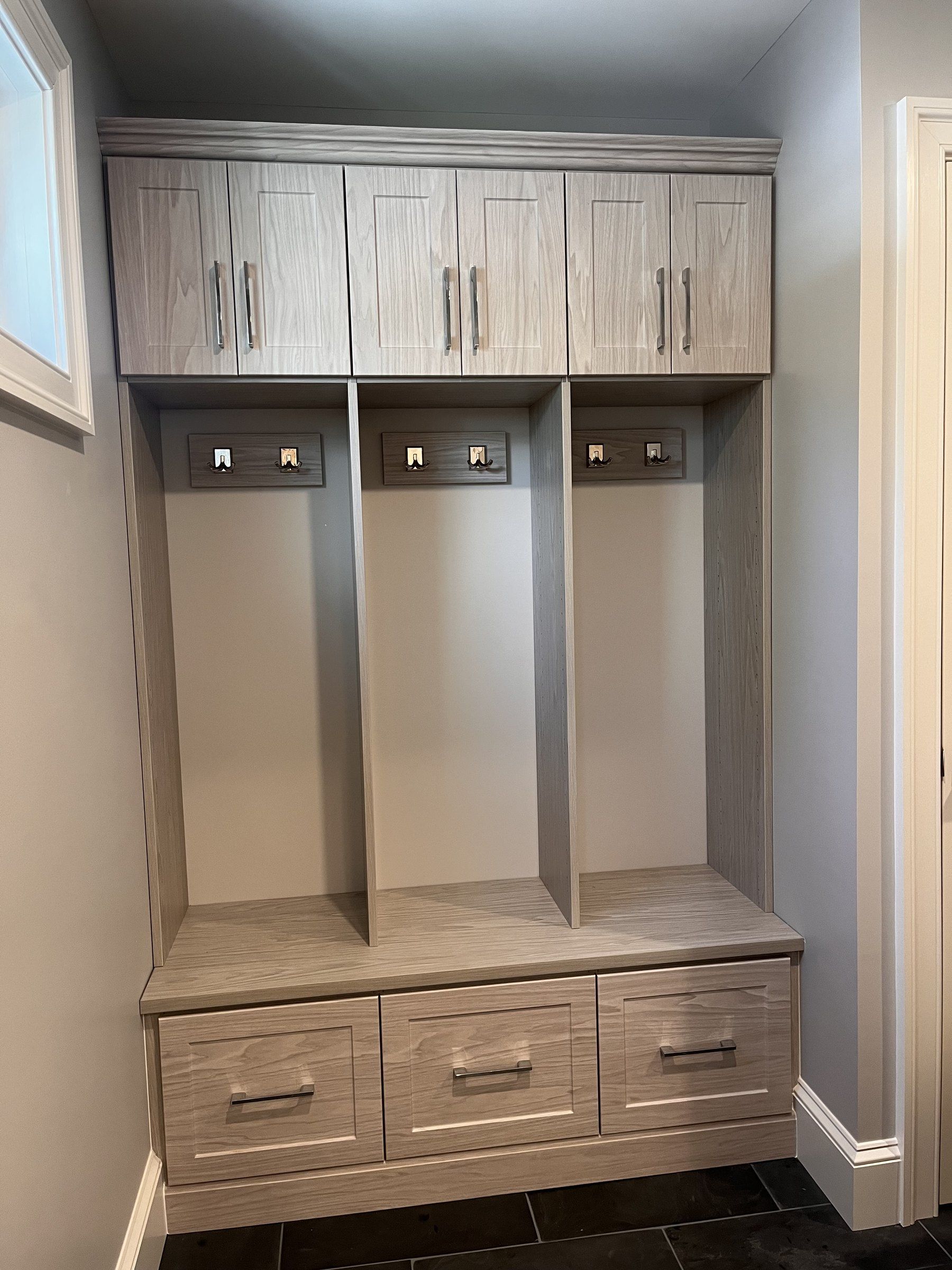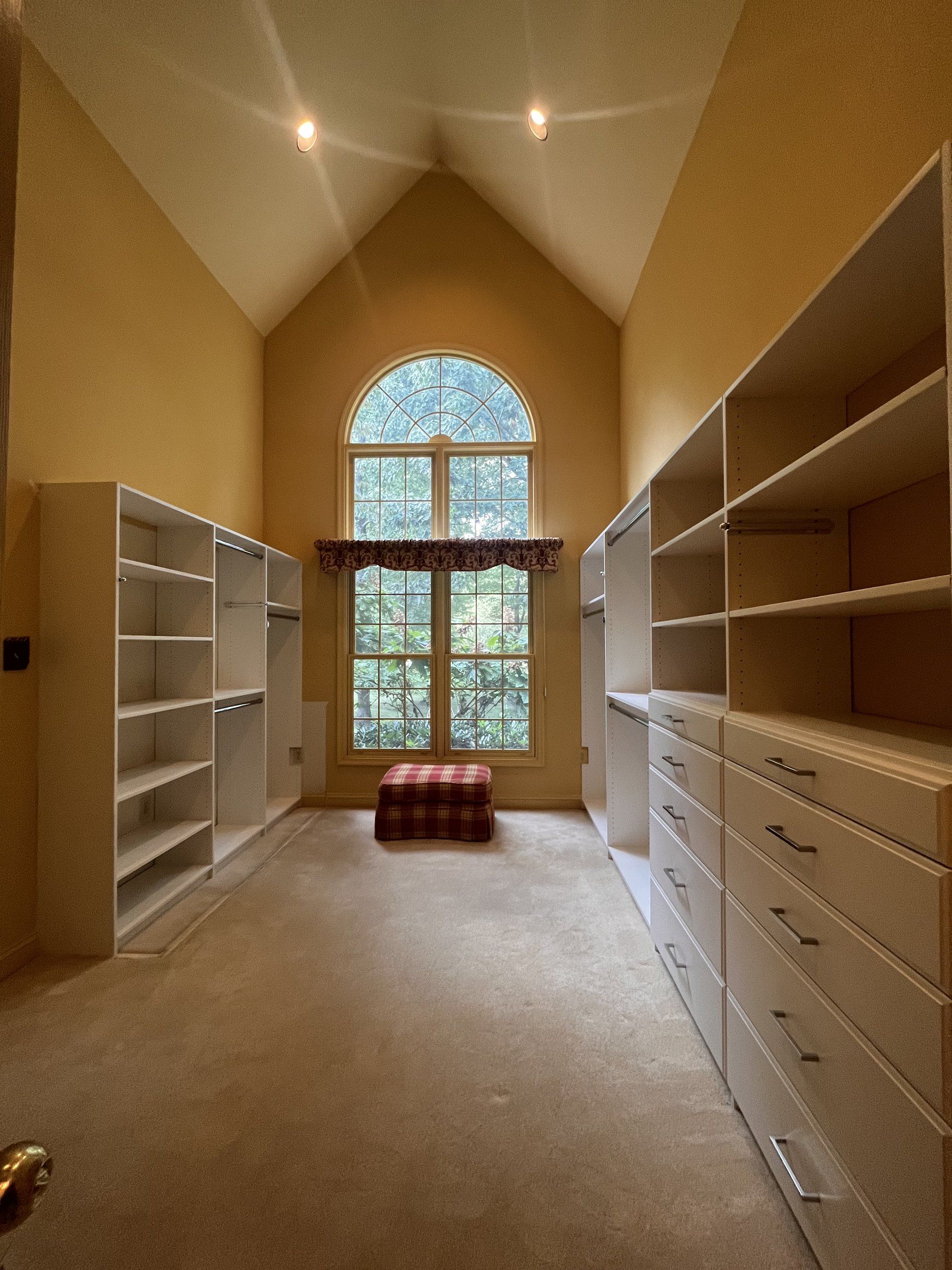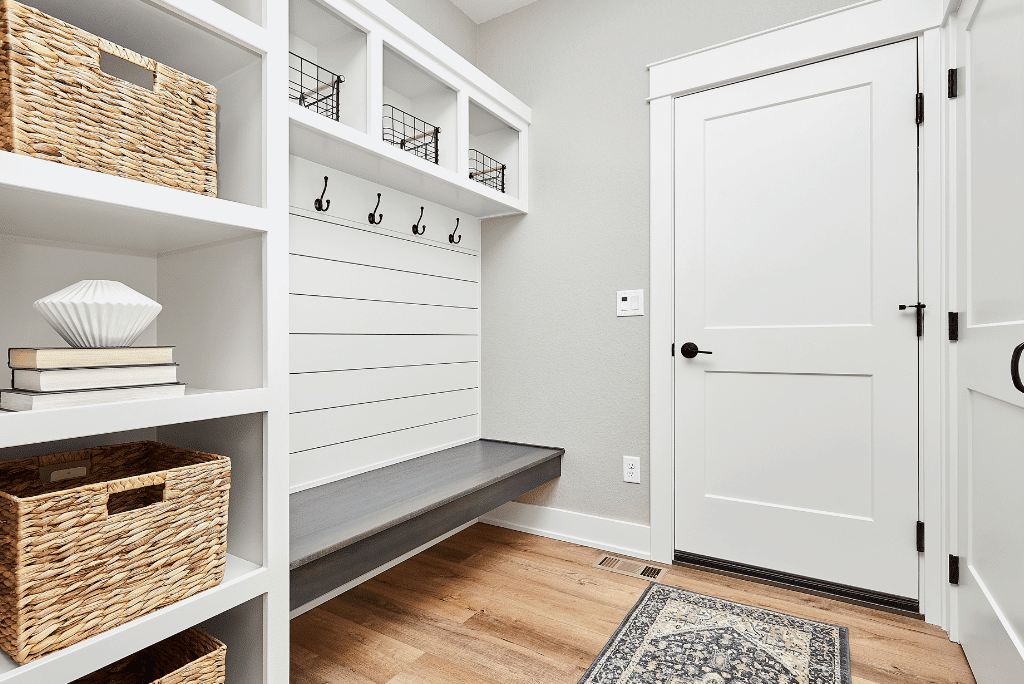
The most useful mudroom closet ideas give every person a zone: lockers or hooks for coats and bags, a bench with drawers or cubbies underneath, open shelves or a tray for shoes, and upper cabinets for seasonal gear. A coat closet with doors can work the same way. Size each zone to the wall you have and the items your household carries in.
An effective mudroom gives every item that enters and leaves your home a dedicated place. Shoes need accessible storage, coats need hooks, and backpacks, sports gear, and wet items need their own zones instead of ending up on the floor. The design ideas below cover what to build and how to lay it out. If you already have a mudroom and need to get it under control, our post on mudroom organization ideas covers the habits and small fixes that keep it working.
Mudroom Storage Ideas for Everyday Clutter
Effective mudroom storage starts with the items your household uses most often. For many families, that means footwear, outerwear, backpacks, and everyday bags. Giving each category a dedicated storage zone makes the entryway easier to use and helps keep frequently used items off the floor and within reach.
Built-In Lockers and Cubbies
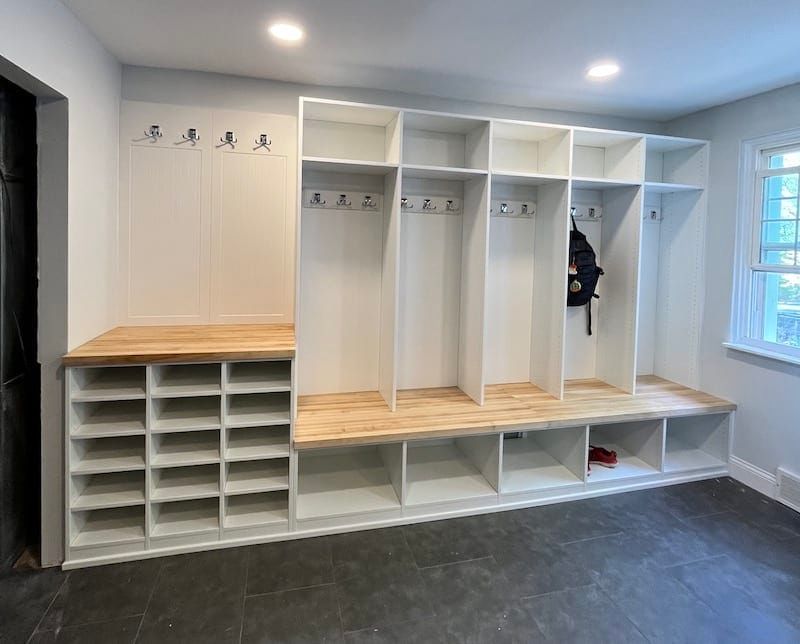
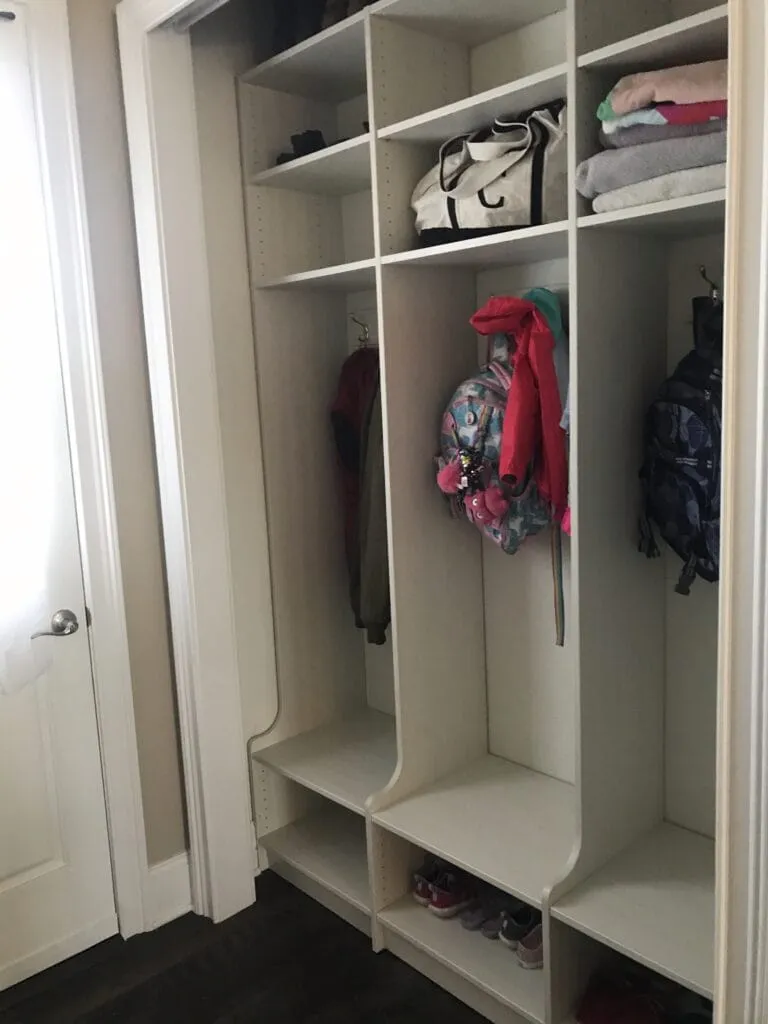
Floor-to-ceiling lockers can give each family member a dedicated storage zone with hooks for coats, shelving for bags, and space below for shoes. Enclosed sections also help reduce visual clutter during busy mornings. Custom-built lockers can be sized to fit the available wall space and finished to coordinate with the surrounding room, creating a more integrated look.
Mudroom Bench Storage
A built-in mudroom bench provides a place to sit while putting on or removing shoes while adding useful storage underneath. Drawers or lift-up compartments can hold sports bags, seasonal accessories, and other bulky items that are better kept out of sight. Positioning the bench beneath hooks, cubbies, or lockers also creates a compact drop zone for everyday routines.
Shoe Shelving and Drawers
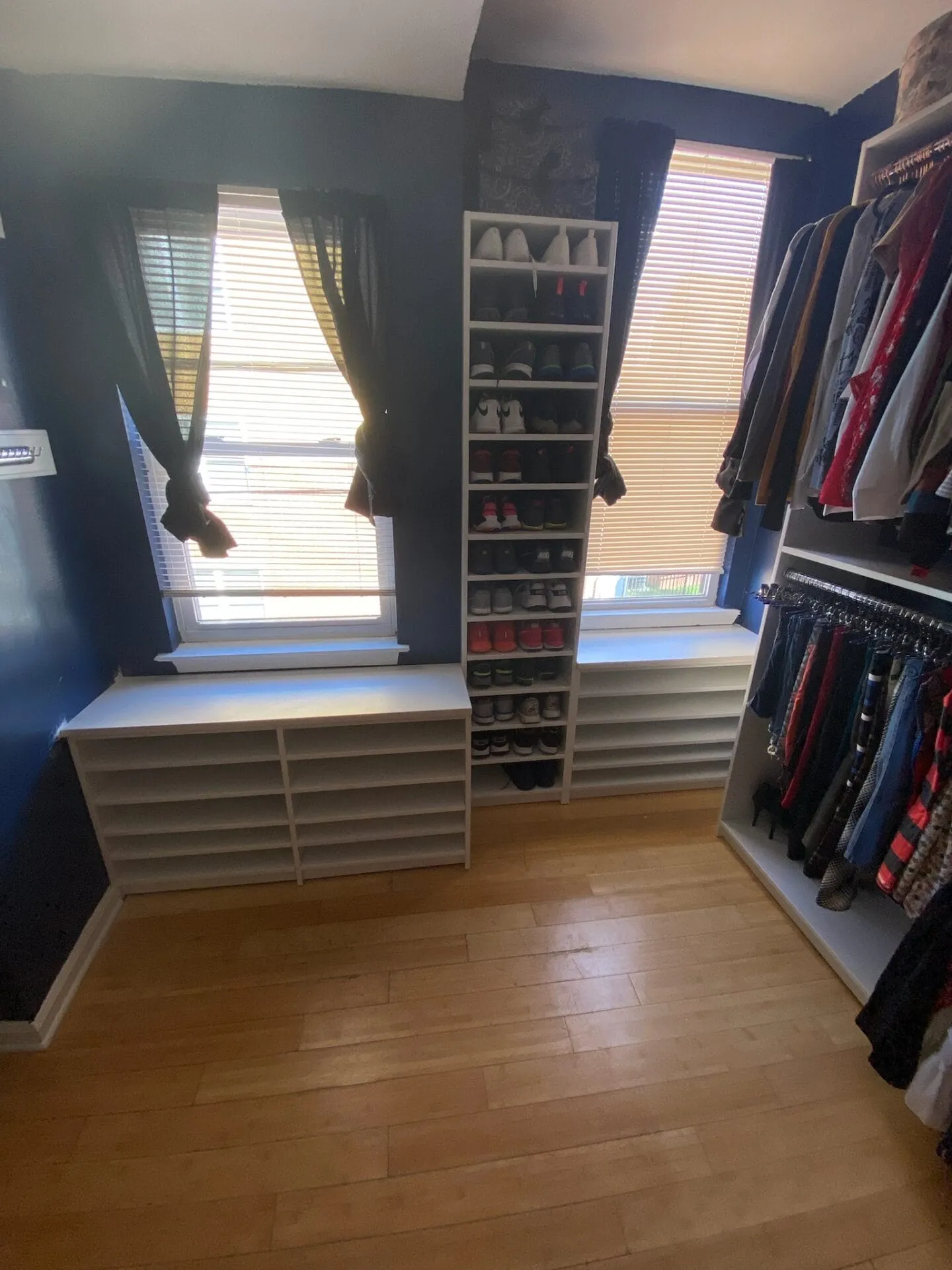
Shoe storage works best when pairs are easy to see, access, and return to the same place. Open shelving provides ventilation and keeps everyday footwear visible, while pull-out drawers can conceal less frequently used pairs and reduce visual clutter.
A slim vertical shoe tower can make use of narrow wall space between cabinet sections. For households with larger footwear collections, custom shoe storage can be incorporated into the mudroom design to keep pairs organized and off the floor.
Upper Cabinets for Seasonal Items
Upper cabinets above lockers or a bench are useful for items that are not needed every day. During winter, they can hold off-season beach and warm-weather gear; during summer, they can store gloves, hats, and other cold-weather accessories. Keeping these items behind closed doors reduces visual clutter while reserving lower, easier-to-reach storage for everyday essentials.
Hooks and Quick-Access Storage
A peg rail or row of sturdy hooks creates an easy-access zone for coats, backpacks, hats, and other items used throughout the day. Installing hooks at different heights can make the storage accessible to both adults and children and help each household member return frequently used items to a consistent place.
A small open shelf above the hooks can hold hats, sunglasses, keys, or other grab-and-go items. Keeping these essentials close to the entry creates a convenient place for the things your household needs when leaving or returning home.
Mudroom Storage for Kids, Sports Gear, Pets, and Wet Items
Family mudrooms often need to handle more than coats and shoes. Kids’ belongings, sports equipment, pet supplies, and wet gear each benefit from storage designed around how often they are used, who needs to reach them, and whether they require ventilation or separation from other items.
For children, storage should be easy to see and reach. Lower hooks, labeled cubbies, and pull-out bins in accessible zones make it easier for kids to return backpacks, shoes, and everyday gear to the same place. Our closet organization tips for families explain how the same zone-based approach can be used throughout the home.
Sports equipment often requires storage for items with very different shapes and sizes. Lacrosse sticks, bats, hockey gear, balls, and sports bags may not fit neatly on standard shelving. A tall vertical section can hold long equipment, while lower drawers, bins, or baskets can contain smaller accessories such as shin guards, gloves, and balls without allowing sports gear to take over the entryway.
Pet supplies can also benefit from a dedicated mudroom zone. Hooks can keep leashes and harnesses easy to grab, while a small cabinet or pull-out section can hold waste bags, grooming items, food containers, and other everyday supplies. Keeping these items together prevents pet gear from spreading into the main walkway or mixing with shoes and bags.
Wet or muddy items should be kept separate from enclosed storage whenever possible. Wire or mesh baskets improve airflow around damp hats, gloves, and scarves, while a boot tray below a bench can collect water, mud, and debris before they reach the floor or cabinet bases. Allowing wet gear to air out before placing it inside closed cabinetry also helps keep the storage area cleaner.
Mudroom Closet Ideas
Not every home has room for a separate mudroom. A closet near the garage door, side door or front door can do much of the same work if it is planned for it instead of holding one rod and a pile of shoes.
Mudroom Closet With Doors
A mudroom closet with doors hides coats, bags and shoes, which suits a front-hall closet or an entry visible from the kitchen or living room. Inside, replace the single high rod with hooks at two heights, a shelf above for hats and gloves, and an open floor section for shoes and a boot tray. Doors also let you add hooks or a shallow rack on the inside face for keys, dog leashes or reusable bags.
Reach-In Closet Converted to a Drop Zone
Removing the doors from a reach-in closet near the entry turns it into an open drop zone. A built-in bench across the bottom, cubbies or lockers above and a cabinet at the top give each family member a section in a space that used to hold coats nobody wore.
Small Closet Mudroom Ideas
In a small closet, the back wall and the full height do the most work.
- Hooks instead of hangers: coats on hooks take less depth than coats on a rod.
- A narrow shoe rack or slanted shelves on the floor, with a tray for wet boots.
- An upper shelf with labeled bins for off-season hats, gloves and beach gear.
- Over-the-door or inside-door storage for small items.
Shallow Mudroom Cabinets
Where the entry is a hallway rather than a room, shallow cabinets and lockers keep the path open. Shoe cubbies and shelves can be about 12 to 14 inches deep, while sections for hanging coats and backpacks need roughly 15 to 20 inches. Mixing depths along one wall gives you coat storage without narrowing the whole hallway.
How to Plan a Mudroom Layout
The right mudroom layout depends on where the entry is located, how much wall and floor space is available, and how people move through the area. Start by identifying the items that need to be stored, then choose a layout that keeps frequently used gear accessible without narrowing the main walkway.
Garage Entry Mudroom
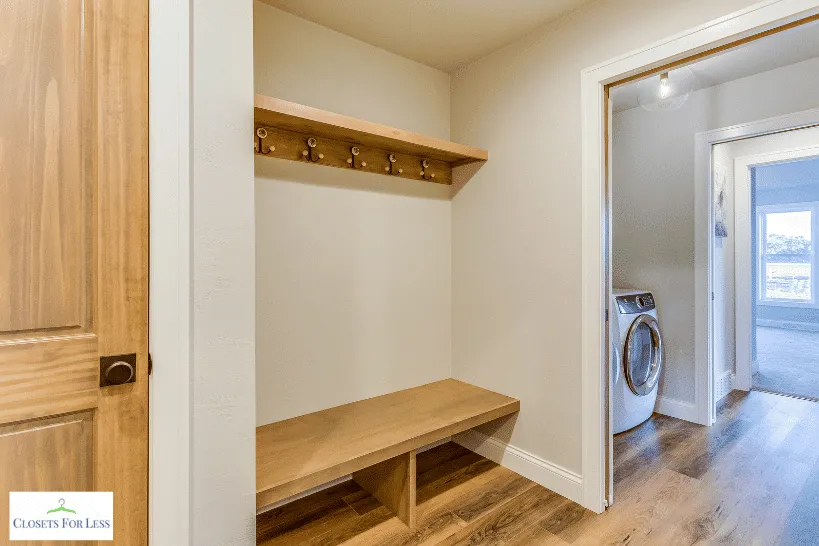
For households that regularly enter through the garage, a mudroom near that doorway can contain shoes, coats, bags, and outdoor debris before they move into the main living areas.
A locker or cabinet run along an available wall can create a dedicated drop zone. If additional storage is needed beyond the entryway, custom garage storage solutions can extend the organization into the adjoining garage.
Narrow Entryway
When floor space is limited, use vertical storage to preserve the walkway. Slim cabinets, floating shelves, wall-mounted hooks, and a fold-down bench can provide useful storage without occupying as much floor area as deeper freestanding furniture. Concentrating everyday shoes, bags, and outerwear along one wall can create a functional drop zone even in a narrow entry.
Mudroom and Laundry Room Combination
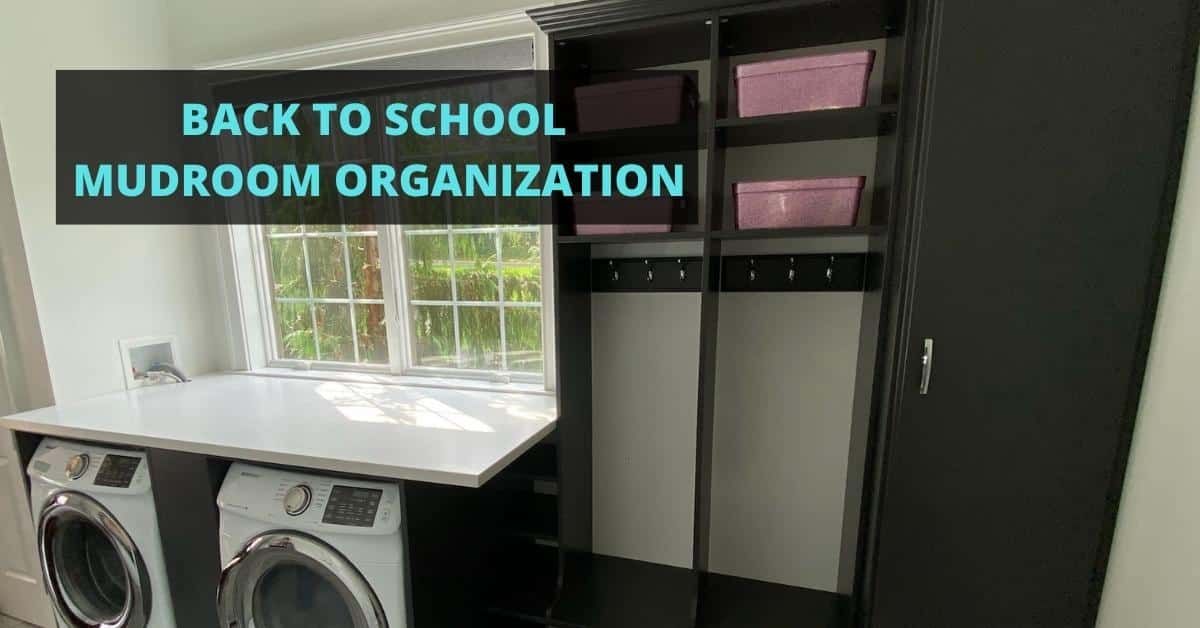
Combining a mudroom and laundry area can create an efficient utility zone for sorting shoes, outerwear, sports gear, and washable items in one place. A custom home laundry room can incorporate cabinets, hampers, shelving, and a dedicated mudroom section so storage and laundry functions remain organized without competing for the same workspace.
Dedicated Mudroom
A dedicated mudroom provides more flexibility for combining lockers, bench seating, drawers, and upper cabinetry across multiple walls. Households with school bags, sports equipment, pet supplies, and seasonal gear can assign separate zones to each category instead of fitting everything onto a single wall.
This also makes it easier to keep everyday items accessible while placing less frequently used belongings higher or farther from the main entry path.
Custom vs. Freestanding Mudroom Storage
Freestanding furniture can provide useful mudroom storage without requiring a built-in installation, while custom systems are designed around the dimensions, storage needs, and layout of a specific space. The right choice depends on how much storage you need, how the room is used, and how closely you want the system to fit the available walls.
| Feature | Custom Built-In | Freestanding |
|---|---|---|
| Fit | Designed for the available wall dimensions | Selected from available product dimensions |
| Materials | Selected as part of the custom design | Depends on the manufacturer and product |
| Installation | Installed and secured as part of the built-in system | Setup varies by product; some pieces may require anchoring |
| Configuration | Planned around your storage needs and room layout | Limited to the sizes and features offered by the product |
| Appearance | Designed to integrate with the surrounding space | Appearance depends on the furniture style and fit |
| Use of Space | Can incorporate wall-to-wall and vertical storage | Depends on the footprint and dimensions of individual pieces |
Closets For Less custom mudroom storage systems use 3/4-inch furniture-grade composite materials and are designed around the dimensions of each space. Built-in cabinetry can make better use of available wall space while creating a more integrated look than individual furniture pieces. The system can also be planned around the household’s specific needs, from shoe and coat storage to sports gear, bags, and seasonal items.
Design Mudroom Storage That Can Change With Your Family
A flexible mudroom storage system can adapt as your household’s routines change. When children are young, lower hooks and open bins can keep shoes, backpacks, and outerwear within easy reach. As their needs change, adjustable shelves and storage zones can be reconfigured for larger clothing, school bags, sports equipment, and other everyday items.
Choosing movable shelves, adjustable rods, and flexible drawer or cubby configurations can make it easier to update the system as storage needs change. Instead of redesigning the entire mudroom when routines shift, individual components can be repositioned or repurposed to accommodate different items.
Closets For Less works with homeowners throughout our service area, including Bucks County, Montgomery County, and the Philadelphia Main Line. Our designers begin the process with a free in-home consultation to measure the available space, discuss your storage needs, and plan a mudroom around how your household actually uses the entryway. For budgeting, our custom closet cost guide explains what affects the price of built-in storage.